 800-861-9372



“I just need a way out of my head. I’ll do anything for a way out of my head.”
These are the lyrics from Mac Miller’s platinum track “Come Back To Earth.” The song’s album, Swimming, achieved platinum status in February of 2021 – two and a half years after the rapper’s death.
It was Miller’s first album to go platinum.
Why didn’t Miller live to see his own success? Because on September 4, 2018, he was given counterfeit oxycodone pills. The drugs contained fentanyl, which is deadly in even the smallest doses.
Apparently unaware of the fentanyl laced into of the pills, Miller overdosed three days later. He died on September 7 from what the coroner labeled “mixed drug toxicity” – a combination of fentanyl, alcohol, and cocaine.
He was just 26 years old.
Dealer Knowingly Provided Pills Laced With Fentanyl
 Fast forward to October 2021. Miller’s songs are going double platinum, and the dealer who supplied the fentanyl-laced drugs has pled guilty of the crime. The dealer, Stephen Andrew Walter, now faces up to 20 years in prison and a fine of up to $1 million.
What happened, exactly?
According to the plea, Walter told a drug runner to give counterfeit oxycodone pills containing fentanyl to Miller’s dealer, who then provided them to Miller.
Walter admits he knew the pills “contained fentanyl or some other federally controlled substance.”
The plea also notes that, if it weren’t for the fentanyl in the pills, Miller would not have died from an overdose. But, because Walter supplied the laced drugs, Miller suffered a fatal overdose three days after receiving them.
Walter’s plea is guilty to one count of distributing fentanyl. The dealer and runner have also been charged.
Mac Miller’s Struggle With Opioid Addiction
Mac Miller, born Malcolm James McCormick, released five rap albums before his death. He was open about his struggle with sobriety, and his lyrics frequently referenced substance abuse.
Just four months before his fatal overdose, Miller crashed into a light pole while driving under the influence. Miller reported that the experience changed his perspective on life. But it clearly didn’t push him to total sobriety.
“I would just tell myself to worry a little less and…don’t create all of this weight for things. Everything has so much weight, but it’s all just chapters. It’s all just pieces of the story. There’s gonna be a next part.”
Miller was preparing to take his newest album, Swimming, on tour when the fentanyl-laced drugs landed in his hands. In one of his last interviews before the overdose, the rapper noted, “There’s pressure. A lot of times in my life I’ve put this pressure to hold myself to the standard of being whatever I thought I was supposed to be, or how I was supposed to be perceived. And that creates pressure.”
When asked what he would tell his younger self, Miller replied, “I would just tell myself to worry a little less and…don’t create all of this weight for things. Everything has so much weight, but it’s all just chapters. It’s all just pieces of the story. There’s gonna be a next part.”
Too Many Americans Never Made It to the Next Chapter
Miller was just one of nearly 30,000 people who died of opioid-related overdoses in 2018. The next year, the total jumped to 50,000.
 This year, drug enforcement agencies are reporting unprecedented amounts of fentanyl in the drugs they confiscate. And stress from the ongoing pandemic seems to be escalating the crisis.
Between May 2019 and May 2020, there were over 81,000 drug overdose deaths in the U.S. That’s a record-breaker for any 12-month period, according to the CDC.
What’s next? Will we see the numbers continue to rise? Will we find new solutions to reach people and prevent future deaths like Mac Miller’s?
We’ll let his words speak for themselves:
“Somehow we gotta find a way
No matter how many miles it takes
I know it feels so good right now
But it all come fallin’ down.”
Get help today at 800-934-1582(Sponsored) to learn about treatment programs for drug and alcohol addiction.

Darknet fentanyl. A 10-month investigation across three continents. Dozens of law enforcement agencies. This was no small operation.
And it paid off.
After careful coordination among nine countries, operation “Dark HunTor” took 500 pounds of illicit drugs off the market – along with $32 million in cash and 45 firearms.
The far-reaching drug enforcement operation was designed to send a message to people peddling illegal drugs: “There is no dark internet.”
No More Hiding in the Dark for Darknet Fentanyl
The dark web has become a playground for online peddling of pills laced with fentanyl.
 Dealers have found new ways to push drugs, post their offerings, and package them like any other online purchase.
“Today, we face new and increasingly dangerous threats as drug traffickers expand into the digital world and use the Darknet to sell dangerous drugs like fentanyl,” noted Administrator Ann Milgram of the Drug Enforcement Administration (DEA).
When researchers interviewed dealers on the dark web, they discovered that it has (seemingly) offered a “safe” space for illegal sales, attracting new criminals and illegal “entrepreneurs.”
One respondent admitted, “I hadn’t ever thought about selling drugs in any capacity because I dislike violence… I was always too scared and slightly nerdy to do that and never really contemplated it seriously until the dark web.”
Another boasted, “Selling offline is borderline stupid. You can make so much more money online, the risks [in selling outside cryptomarkets] aren’t even remotely worth it.”
Finally Holding Internet Criminals Accountable
This recent operation led to a staggering 150 arrests – so far. Jean-Philippe Lecouffe, deputy director of operations for Europol, reports that the investigation is ongoing, and will likely lead to even more arrests. He noted, “Each time we arrest people, each time we search a house, we find new leads.”
Law enforcement officials want to make it clear that dealers can’t hide behind the dark net.
Lecouffe explained, “The point of operations such as the one today is to put criminals operating on the dark web on notice: the law enforcement community has the means and global partnerships to unmask them and hold them accountable for their illegal activities, even in areas of the dark web.”
Assistant Attorney General Kenneth A. Polite Jr. of the Justice Department’s Criminal Division also noted, “The men and women of the department’s Criminal Division, in close collaboration with our team of interagency and international partners, stand ready to leverage all our resources to protect our communities through the pursuit of those who profit from opioid addiction, under the false belief that they are anonymous on the Darknet.”
IRS Criminal Investigation Chief Jim Lee added, “The Darknet no longer provides a concealing cloak for criminals to operate.”
Darknet Fentanyl Dealers Busted Around the World
 Operation Dark HunTor included coordinated efforts among agencies in the United States, the United Kingdom, Australia, Bulgaria, France, Germany, Switzerland, the Netherlands, and Italy. The investigation and resulting arrests exposed key players in the illicit online drug market. The 150 arrests included 65 in the U.S., 47 in Germany, and 24 in the United Kingdom.
What kinds of dealings did the operation discover? In Monaco, officials exposed home-bound drug makers who produced deadly-disguised pills. Using special presses, they could create pills that resemble legitimate medication. Another piece of the investigation uncovered operations based in Florida and Rhode Island that “advertised and sold pressed fentanyl pills throughout the United States.” Lecouffe reports that the long list of suspects arrested includes some “long-sought, high-value targets.”
Deputy Attorney General Monaco noted, “Operation Dark HunTor prevented countless lives from being lost to this dangerous trade in illicit and counterfeit drugs, because one pill can kill.” And that’s no exaggeration. Just two milligrams of fentanyl can be fatal. And dealers often lace their drugs with far more than the lethal amount.
“These drug traffickers are flooding the United States with deadly, fake pills, driving the U.S. overdose crisis, spurring violence, and threatening the safety and health of American communities,” said Milgram. “DEA’s message today is clear: criminal drug networks operating on the Darknet, trying to hide from law enforcement, can no longer hide. DEA, the U.S. interagency, and our valued international partners are committed to dismantling drug networks wherever they are, including the Darknet.”
If you or someone you love is experiencing a substance use disorder, help is available. Call 800-934-1582(Sponsored) today.

When does drug use become drug abuse?
What does it look like to cross the line from medication to dependency?
How can you tell if you or a loved one needs help with opioid addiction?
How about we take the guesswork out of it?
Mental health professionals look to the DSM-5 for guidance, and we can too. The Diagnostic and Statistical Manual of Mental Disorders (5th edition) is the ultimate guide for professionals to diagnose mental health disorders. This tool, published by the American Psychological Association (APA), includes over 150 mental disorders, and explains the symptoms, risk factors, and criteria for each.
One of these disorders is opioid use disorder (OUD).
Based on the following 11 symptoms, OUD is diagnosed as mild (2-3 symptoms), moderate (4-5 symptoms) or severe (6 or more symptoms). Watch for two or more of these red flags to know if it’s time for you or a loved one to seek help with opioid addiction.
Recognize These Red Flags for Opioid Addiction?
- Warning sign: Opioids are taken in larger amounts or over a longer period of time than intended.
Steve injured his knee playing football last year. His injury has healed, but he continues to take painkillers “just in case.”
- Warning sign: Multiple attempts have been made to stop taking opioids but with no success in reducing, controlling, or stopping use.
 Rachel swore she was done with the painkillers. She threw the rest of them away, and resolved to get through the rest of the week without taking another one.
That was last month. Since then, she’s gotten more and has continued to take them every day. She just can’t seem to make it through the day without “a little help.”
- Warning sign: An excessive amount of time is spent obtaining, using, and recovering from the effects of opioids.
Jimmy doesn’t seem to have time for much anymore. He takes fewer shifts at work because he’s often too high or dope sick to work. He spends most of his nights searching online for opioids and arranging his next purchase. It’s like he’s devoting more time to the drugs than the people in his life.
- Warning sign: Cravings to use opioids are persistent.
It’s like hunger or thirst. From the moment I wake up, my body is aching for another hit. And once I use, it doesn’t stop. I start craving more right away.
- Warning sign: Opioid use makes it difficult or impossible to fulfill obligations at home, school, or work.
Natalie used to be the one everyone could count on. But now, she shows up late to work, and she often takes long breaks. She forgets appointments. Her house is a wreck. And she gave up entirely on the class she was taking. All because she’s hooked on prescription pain medication.
- Warning sign: Continued use even though the behavior causes clear social or interpersonal problems.
Bob’s boss threatened to fire him if he ever showed up to work high on drugs again. His girlfriend broke up with him because his drug use ruined their relationship. And his ex-wife threated to take away visitations with their son. But none of that changed Bob’s habits – he had no plans to stop using heroin.
- Warning sign: Participation in social, occupational, or recreational activities stops.
Sue used to be involved in a lot of things, but she didn’t seem interested anymore. She volunteered each month at the food pantry. She went out to dinner with friends on the weekends. She went to classes at the gym. Now, all of that has stopped. She just wants to stay home.
- Warning sign: Using opioids in situations that may not be safe.
No, I don’t know for sure what’s in the drugs I take at parties, but that’s ok. I’ll risk it. I bought some pills the other day from some guy online, and they turned out fine. What’s the big deal?
- Warning sign: Continued use of opioids even though it negatively affects mental or physical health.
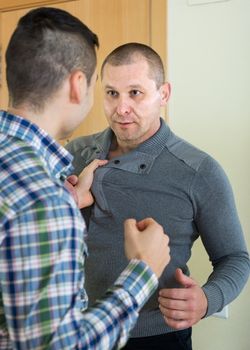 Dave woke up in unfamiliar surroundings. He could tell he was in a hospital, but he didn’t know why?
His mom quickly came to his bedside and answered his questions. Apparently, he had overdosed last night.
“Well then,” he thought to himself, “I’ll have to be more careful next time with the number of pills I take.”
- Warning sign: A level of tolerance is present to achieve the effects of opioids.
I remember when one pill sent me flying. Now, I have to take several to get that same feeling. It’s getting pretty expensive to keep this up.
- Warning sign: Withdrawal symptoms are experienced when opioid use stops.
Kevin seemed anxious. He was sweating, and he couldn’t sit still. When I asked him what was wrong, he quickly said he was fine. But he seemed nauseated, and his eyes didn’t look right, either. He explained that he had run out of medicine and just needed to get a refill – then he would feel better.
Recognizing It’s Time to Seek Help for Opioid Use Disorder
Opioid addiction is challenging, but remember that effective treatment options exist. If you (or a loved one) are currently using opioids, knowing how to recognize the signs can be life-saving. Don’t wait for OUD to worsen. Help is available now.
If you or someone you love is experiencing a substance use disorder, help is available. Call 800-934-1582(Sponsored) today.

I remember when he was five and his biggest concern was getting the latest dinosaur toy. Now Josh is 15, and he’s just so different lately.
I don’t expect him to be five anymore, but the changes I’m seeing…I’m concerned. He’s lost interest in soccer, started hanging out with a new crowd, and he’s just so moody. Is this normal teen trouble, or should I be worried about drug abuse?
This mom is rightfully concerned. If there’s one thing we all know is true, it’s that the teen years typically involve some moodiness and unpredictable behavior. After all, these kids are a cocktail of hormones, and they’re trying to figure out their place in the world.
But still, there are some behaviors that go beyond the norm. And these behaviors could indicate opioid abuse.
Signs Your Teenager is Abusing Opioids
Be on the lookout for the following warning signs:
- Severe Mood Swings
 Teenagers whose moods and personalities change suddenly and drastically are potentially under the influence of opioid abuse. These mood swings are more severe than your typical teenage drama. If your teen is abusing opioids, he might become depressed and withdrawn or angry and hostile (or all of the above). He may even get violent or threaten other family members.
- Loss of Interest
Teens who become addicted to opioids may lose interest in the things that used to bring pleasure. School, sports, friends, work, and other interests can quickly fall by the wayside. He may lack motivation to fulfill obligations and start to withdraw from extracurricular and other social activities. Grades may drop. If your teen has become apathetic and unmotivated – and there is no other clear reason for the abrupt change – it could indicate your child is struggling with opioid abuse.
- Physical Changes
Opioid abuse takes its toll on the body. Physical symptoms can include constricted pupils, constipation, flushed cheeks, and slowed breathing. Your teen may also experience drowsiness or sudden bursts of energetic euphoria. You may also notice a lack of energy and poor eating habits.
If your teen is abusing opioids, he may experience withdrawal when unable to get his hands on a drug of choice. Opioid withdrawal symptoms include sweating, nausea, headache, diarrhea, insomnia, body aches, and anxiety.
Opioid abuse can also affect your teen’s appearance. No matter their age, people who are addicted to opioids eventually tend to neglect their appearance. They may care less about bathing and brushing their teeth; many wear the same dirty or wrinkled clothes for days on end.
- A Group of New “Friends”
Teen social circles change on a dime. But if your teen starts to hang out with a new crowd for no apparent reason, it might be due to drug use. Keep in mind that this shift in relationships can happen gradually or suddenly. He may let old friendships die off as they drift toward other teens using the same drugs. Or, he might make a drastic shift into a whole new friend circle. Either way, this could be a warning sign that he’s mixed up in the drug scene.
- Opioid Drug Paraphernalia
If you find drug-related items in your teen’s possession or in his room, this is an obvious red flag. Opioid paraphernalia may include needles, lighters, pipes, and, of course, the actual drugs. If your teen isn’t abusing the drugs, he definitely knows someone who is. It’s highly unlikely he’s just the innocent bystander holding someone else’s supplies, but isn’t doing the drugs himself. The important thing to remember is you can’t afford to dismiss opioid paraphernalia as insignificant.
What If You Notice the Warning Signs?
At the end of the day, if you notice the warning signs your teen is abusing opioids, you have one pro-active choice: talk to your teenager.
If you’ve noticed physical symptoms, suggest taking him to the doctor for a check-up. Resistance to a routine exam may be further indication that your teenager is abusing opioids.
Interact with him after he’s been hanging out with friends. This can help you pinpoint signs of drug use (if that’s what they’ve been doing in their new social circle).
Ask about his behavior changes. Let him know your concerns. Yes, it’s a hard conversation to have, but ignoring the issue isn’t in his best interest. Take action as soon as possible, so, if he is abusing opioids, he can get the help he needs.
Get help today at 800-934-1582(Sponsored) to learn about treatment programs for drug and alcohol addiction.

The opioid epidemic has been raging a deadly war in the United States for over two decades.
In the late 90s, Big Pharma readily reassured doctors that their patients would not become addicted to opioid pain relievers, so they started doling out prescriptions at greater rates than ever before. Unsurprisingly, this led to widespread misuse of these highly dangerous medications (e.g. natural and semi-synthetic opioids and methadone), and overdose rates began to steadily increase.
Flash forward twenty years and, and this avoidable plague has only gained momentum. In 2019 alone, over 10 million Americans misused opioids, with significant increases in overdose deaths involving synthetic opioids, particularly fentanyl. Today, synthetic opioids are now the most common drugs involved in drug overdose deaths in the United States.
While the mortality related to opioid addiction has reached epidemic levels, we have also seen a massive uptick in the number of individuals seeking treatment.
What is Medication Assisted Treatment?
Three million American citizens have had or currently suffer from opioid use disorder (OUD), and more than 500,000 in the United States are dependent on heroin.
 Medication-assisted treatment (MAT) uses a combination of prescription medications, counseling, and behavioral therapies to treat opioid addiction, sustain recovery, and prevent overdose.
Medications for opioid use disorder, also known as MOUD, have been shown to reduce the risk of fatal overdoses by approximately 50%. Furthermore, studies have found that MOUD is also effective at reducing the risk of nonfatal overdoses, which can be highly traumatic and medically dangerous.
In the face of the United State’s harrowing drug epidemic, one of the primary addiction recovery methods for medication-assisted treatment is a prescription drug called Suboxone.
What is Suboxone and How Does it Work?
Since its FDA approval in 2002, Suboxone has become one of the most commonly used medication-assisted treatments for opioid addiction. Also known under the brand names Bunavail or Zubsolve, Suboxone contains two primary active substances:
- Buprenorphine is a long-acting opioid used to replace the shorter-acting, more addictive opioids that many drug users become addicted to (e.g., heroin, oxycodone, fentanyl or hydromorphone). When taken at the correct dosage, it blocks opiate receptors in the brain to provide relief from cravings and withdrawal symptoms without causing the person to feel high (euphoric) or sleepy.
- Naloxone, also known under its brand name Narcan®, is a medication used to reverse opioid overdose. When combined with buprenorphine, however, it acts as an antagonist; it enhances the opioid-blocking properties of buprenorphine while discouraging misuse. Therefore, if a drug user were to crush and snort a tablet of Suboxone, the added naloxone will block opioids from the brain’s receptors and prevent any sort of high from occurring.
When combined with supervised medical care and therapeutic treatment, Suboxone is considered a highly effective treatment for opioid use disorder.
Suboxone Dosages
Suboxone is an oral medication that can be administered sublingually (placed under the tongue) or buccally (between your gums and cheek) as a single daily dissolvable dose.
It’s offered in the following four dosages:
- 12 mg buprenorphine with 3 mg naloxone
- 8 mg buprenorphine with 2 mg naloxone
- 4 mg buprenorphine with 1 mg naloxone
- 2 mg buprenorphine with 0.5 mg naloxone
Most people use heroin, fentanyl, and prescription opioids multiple times a day, whereas a single daily dose of buprenorphine is long-lasting, limiting exposure to potentially lethal illicit opioids.
Common Side Effects of Suboxone
Suboxone treatment for opioid use disorder can include a number of side effects, the most severe of which are caused by Suboxone’s status as a partial opioid agonist (i.e. the presence of buprenorphine in the compound).
According to the drug manufacturer, common side effects of Suboxone can include:
- Nausea and vomiting
- Headache
- Sweating
- Numb mouth
- Constipation
- Painful tongue
- Dizziness and fainting
- Problems with concentration
Treatment Plans
While treatment approaches vary depending on the addiction recovery center you or your loved one attends, there are typically four main steps in the Suboxone treatment process:
 Step 1 → New patient intake
This typically includes a medical and psychosocial evaluation, drug screen, and blood tests to ensure you’re a viable candidate for Suboxone- Step 2 → Induction
This phase involves a transition from a user’s current opiate intake to Suboxone, with the aim of minimizing “cold turkey” withdrawal symptoms - Step 3 → Stabilization
This phase begins after a person has discontinued or greatly reduced their drug use, no longer has cravings, and has few or no side effects. Suboxone is adjusted to the lowest dose to suppress withdrawal symptoms to allow for eventual tapering off and discontinuation of treatment - Step 4 → Long-term maintenance
If you or a loved one suffers from a severe opioid addiction, then ongoing, medically supervised treatment of Suboxone and therapeutic support may be required. Consult with a medical professional for more details.
Get the Help You Need
Get help today at 800-934-1582(Sponsored) to learn about treatment programs for drug and alcohol addiction.

The U.S. continues to not only fight the COVID-19 pandemic, it is now also grappling with some major supply chain issues that are leaving the country in chaos. Caused in part by the pandemic, disruptions to the global supply chain are responsible for gridlock in ports, material scarcity, bare shelves in grocery stores and prison commissaries, increasing freight prices, and a huge shortage of workers.
Not surprisingly, there are a lot of stressed workers, unhappy customers, and anxious companies watching their profits dwindling. But plenty of Americans are also faced with health-related consequences as alcohol and other pharmaceuticals are among many of the products delayed.
For people struggling with alcohol use disorder and health conditions like opioid addiction, this is having a visible impact.
A Time of Uncertainty
Jake Duke, a regional manager of Spec’s Liquor told ABC News: “We had 50 people waiting in line, just to see what we had coming in this morning because it’s a guessing game for us, just as it is for the guest.”
 He shares his frustration about this supply chain uncertainty, “They don’t know what’s coming. We don’t know what’s coming,” he said.
Last week, the American Medical Association called the supply chain issues an urgent healthcare crisis, as the Food and Drug Administration announced 115 drugs are in short supply nationally. Those drugs include chemotherapy, Adderall, insulin, oxycodone, and some anxiety medications.
Heading the writing on the wall – and experiencing their own supply chain delays – pharmacists warn hundreds of medicines could be placed on backorder at any time.
So what are the implications? Well, those with substance use disorders could face some pretty severe consequences if suddenly forced to stop certain medications. And withdrawal symptoms are one of those consequences.
The Risk of Suddenly Stopping Medication
To abruptly stop using opioids, including prescription opioids that are in short supply, can cause withdrawal symptoms, including (but not limited to) flu-like symptoms, stomach ache, vomiting, diarrhea, muscle aches, anxiety, restlessness, inability to sleep, high blood pressure, runny nose, rapid heartbeat, visual disturbances, and excessive sweating.
For those struggling with severe alcohol addiction who face a lack of supply, the results could be potentially deadly. People who are used to drinking large amounts of alcohol have likely developed a dependence. If they stop drinking (also known as “going cold turkey”) they can experience seizures and delirium tremens — a life-threatening condition that can cause tremors, shaking, confusion, hallucinations and can lead to a heart attack, stroke, or even death.
Risk factors for those who stop drinking and develop delirium tremens include:
- Adult men
- People with a history of seizures
- Those with have experienced alcohol withdrawal previously
- Heavy and long-term drinkers: defined as men who drink more than 14 drinks per week and women who drink more than 8 alcoholic drinks per week.
Why is America Experiencing Supply Chain Issues?
According to the Economist, the main reason for the supply chain problem is the pandemic. After $10.4 trillion in global stimulus money was distributed, it resulted in people buying more goods and services than ever, putting a major strain on supply chains globally.
However, the pandemic also caused a serious manufacturing problem; some goods can’t be made as quickly and efficiently as others. Electronics and clothing are stuck because of industrial shortages in microchips in places like Taiwan, and the Delta variant has closed down clothing factories in other parts of Asia.
When goods are eventually sent to the U.S., we don’t have enough truck drivers to deal with the huge demand to get goods to customers. Companies are now struggling to fill these service jobs and, despite hefty signing bonuses for truck drivers, we are still in need of tens of thousands of truck drivers to make up the supply chain short fall.
Ending Supply-Related Withdrawal Symptoms
While shopping and nice-to-have items are one thing, life-saving medications and substances that people are dependent on are a much more serious problem.
 If you go to a hospital, you don’t expect to find out they’re out of a drug that can save your life. Or if you have a prescription for a medication that keeps chronic pain at bay, that you’ll suddenly be left with excruciating pain and withdrawal symptoms. So what’s the answer?
According to the Harvard Business Review, the U.S needs to reimagine its pharma supply chain. They say we’re in this situation because of a poorly designed global supply chain, despite relying on it for our nation’s most essential medical needs. While it’s an intolerable, and potentially dangerous situation for millions of Americans, they say it need not be this way if we fulfill the production of vital medicines within the U.S. instead of abroad.
The U.S. is too dependent on global production and supply of these medicines. When something goes wrong, like a pandemic, we’re left struggling to meet the needs of our nation.
The answer, HBR says, is to stop relying on China and India for medicine materials — where 80 percent of active medicine ingredients come from — and start making these medicines in the U.S.
If you or someone you love is experiencing a substance use disorder, help is available. Call 800-934-1582(Sponsored) today.
Images Courtesy of Pixabay

The opioid crisis is a complex issue in the United States. Opioids kill 50,000 Americans every year, yet they’re still considered to be an effective pain reliever for chronic pain. That’s something lawmakers hope to change by implementing more training programs for doctors and providers prescribing opioids.
The Scope of Opioid Prescribing in the US
The CDC indicates that opioid prescribing has decreased in the last few years — from 259 million prescriptions in 2012 to 153 million prescriptions in 2019. However, 153 million prescriptions still amounts to nearly two thirds of all adults in the United States getting a bottle of prescription opioids. That’s pretty staggering when you think about it.
Fueled by concern in his community in West Virginia, Senator Joe Manchin is pushing the Food and Drug Administration to provide additional safeguarding training for healthcare providers prescribing opioids — something that is long overdue according to treatment providers and recovery advocates.
Karren Simonsen, a practice nurse from the Mid-Atlantic Recovery Center, told reporters that providers need to be held accountable, and that doesn’t just include doctors. “It’s important that not only are primary care providers educated and held accountable for the prescriptions that they’re writing, but also dental providers because that’s something that we see often,” she said.
Other treatment providers at MARC said it is critical to know about people’s backgrounds and any co-occurring disorders before treating those at risk of misusing opioids.
The Risks of Opioid Use
There are multiple factors at play with the use and prescribing of opioids: patients are struggling with chronic pain and, in an attempt to alleviate that pain, doctors rely on information they’ve been provided about opioids as an effective painkiller.
 Chronic pain is defined as pain that lasts more than three months and can be the result of an underlying medical condition or injury. It is estimated that over 100 million Americans live with chronic pain, which can be really challenging to manage.
While doctors did not know this initially, it has come to light that there is a significant risk associated with opioid use in the development of opioid dependence and even addiction (opioid use disorder). The true risks were withheld by opioid manufacturers, when they lied and misled doctors, telling them that opioids were safe and effective for the treatment of pain. The New York Times reported that Purdue Pharma knew there was significant abuse of their drug “OxyContin” years after its introduction, and they concealed that information.
By that time, however, America was already dealing with an opioid crisis. According to the National Institute on Drug Abuse, opioid use disorder affects three million Americans each year.
In 2020, 93,000 Americans died of a drug overdose which is a 30 percent rise since 2019. Dr Nora Volkow, the director of the National Institute on Drug Abuse told NPR, “This is the highest number of overdose deaths ever recorded in a 12-month period, and the largest increase since at least 1999.” Volkow described this rise as “chilling” and another sign that the opioid crisis and COVID-19 pandemic are having a deadly effect on the US.
“This has been an incredibly uncertain and stressful time for many people, and we are seeing an increase in drug consumption, difficulty in accessing lifesaving treatments for substance use disorders and a tragic rise in overdose deaths,” she said.
Prescribing Opioids for Pain Relief
Opioids are still the most commonly prescribed medication for pain symptoms or a pain-related diagnosis, and prescriptions are most frequently written in general and family practices. A staggering 20 percent of patients reporting symptoms of pain will be given an opioid.
In writing the facts about opioids, it’s also important to put this information into context. There are thousands of stories online about how individuals live every day with chronic pain, and, worse, those who can’t get adequate pain relief.
For example, Beth has lived with chronic pain for over 18 years, beginning from sciatica. The pain now extends to her lower back, arms and various parts of her body. Medication, among other lifestyle factors she says, “is a necessary and core tool for me in the management of chronic pain.”
Conversely, there are thousands of stories about people who have struggled with pain medication, such as Britton, a veteran who struggled with prescription opioids following an injury, Stevi Rae who struggled with addiction after a car crash and the use of prescription opioid medication, and Ann Marie who tragically lost her son to a prescription opioid overdose.
The CDC states that prevention, assessment, and treatment of chronic pain are challenges for healthcare providers and systems, with a lot of pain going unrecognized, particularly among racial minority groups, women, the elderly, those with cognitive impairment, and those at the end of life.
Is training the answer, or should there be more restrictions on opioid prescribing? The Centers for Disease Control and Prevention (CDC) seem to think it’s a combination of both.
CDC Opioid Prescribing Guidelines
CDC data shows that since 1999 deaths from prescription opioids have increased more than five times — a loss of over 200,000 Americans have died from prescription opioids.
 The CDC states that they are committed to combating the opioid overdose epidemic by improving the way opioids are prescribed. They provide clinical practice guidelines that can ensure patients have access to effective pain management but they also reduce the risk of opioid use disorder and death.
The CDC Guideline for Prescribing Opioids for Chronic Pain provides clear recommendations to the prescribing of opioid pain medication.
The CDC also collects data to monitor trends and advances research, about opioid use; builds state, local, and tribal capacity to increase prevention activities and use data to inform a public health response to opioid use; supports providers, healthcare systems and payers with the ability to make evidence-based decisions that promote patient safety and improve opioid prescribing; partnering with public safety officials and community organizations; and increasing public awareness about opioid misuse and overdose.
While the FDA is being challenged by lawmakers to provide training to opioid prescribers, there is little information about such a training program. However, the FDA clearly states on their website that their highest priority is to advance efforts to address the crisis of misuse of opioid drugs harming families. Their approach seeks to decrease exposure and prevent addiction, support addiction treatment for those with opioid use disorder, foster the development of new novel pain therapies, and improve enforcement and assess the risk/benefit of opioids.
If you or someone you love is struggling with a substance use disorder, help is available. Call 800-934-1582(Sponsored) today.

“Two out of every five fentanyl pills that we are seizing are a lethal dose.” – Kyle Williamson, Special Agent, El Paso Drug Enforcement Agency
It’s unprecedented. Fentanyl seizures by the El Paso DEA are up over 524%, and methamphetamine seizures are up over 200%.
These numbers were reported by Kyle Williamson, a recently retired Special Agent with the El Paso Drug Enforcement Agency. Why the massive increase? Williamson says one of the main reasons is the influx of fentanyl streaming across the southern border. The demand for opioids in the U.S. is high, so the supply is coming in to meet it.
But…people aren’t getting the drugs they might expect. Often, the drugs are counterfeit fentanyl pills manufactured in Mexico. These lethal-dose pills are disguised to look like regular Oxycodone that a person might get from their doctor.
The result? Overdose deaths are on the rise. The CDC reported a staggering 96,779 drug overdose deaths across the nation in the 12-month period ending March 2021. In the 12 months prior to that, there were 74,679.
Williamson stressed the importance of educating people about the deadliness of fentanyl, especially since these pills become so easy to access. He notes, “They are distributed through social media, they’re on the streets, they’re in the schools…they’re everywhere.”
Why is Fentanyl So Deadly?
 Fentanyl is 100 times more powerful than morphine. With proper medical monitoring, it is possible to use this controlled substance safely for severe pain relief. But…that’s not exactly what’s happening with smuggled drugs.
Dealers mix fentanyl with other substances to make their product more powerful and cheaper to produce.
Since just two milligrams of fentanyl can be fatal, the drug concoctions that dealers are putting in people’s hands are often far deadlier than people realize. The U.S. DEA has come across counterfeit pills stuffed with more than 5.1 milligrams of fentanyl each.
Of course, someone can take a pill without realizing it contains any fentanyl. Or, they may take a pill knowing it contains the powerful drug, but not know just how much they’re getting in that little pill. It’s not as if there’s quality control or oversight of smuggled drug production. If drugs are purchased on the black market, there’s no way to know exactly what’s in them – until it’s too late.
A Spreading Poison
Williamson and other El Paso officials have noticed the uptick in smuggling and overdoses, but the problem isn’t just at the border. DEA Acting Administrator Christopher Evans noted, “While a major entry point for fentanyl is the Southwest border, the cartels are spreading their poison into communities across the nation.”
In an effort to stop this spread, the DEA launched Project Wave Breaker. This initiative “aims to reduce the amount of fentanyl coming across the Southwest border, reduce crime and violence associated with drug trafficking, and ultimately save lives by reducing the demand for illicit fentanyl.”
Launched in April of 2021, Project Wave Breaker involves outreach and enforcement efforts to stop the flow of fentanyl. It will also target Mexican criminal organizations, who are known as the biggest suppliers and distributors of this drug in the United States.
What Else Can be Done About Fentanyl?
Well, we can apply some basic economic principles, even if the business is illegal (and deadly). It’s basic supply and demand. The demand is high, so the supply has risen. We need to reduce the demand.
As Williamson noted, education is key. That means continuing to educate people about fentanyl and how smugglers are sneaking it into illegal substances in deadly amounts. By taking even one pill, people are taking their lives into their own hands.
Would some still take the risk? Possibly. But hopefully the increased awareness will give people pause and prevent some of the overdoses we’re seeing across the country.
Meanwhile, initiatives like Project Wave Breaker will continue to attack the problem from the legal side. Last year, officials involved in the project seized a total of 2,316 kilograms of fentanyl. That’s enough lethal doses to kill more than a billion people.
For information about treatment options for you or a loved one, call 800-934-1582(Sponsored) today.
Images Courtesy of Pixabay

Dave seems…different. He used to laugh easily, and he was always up for socializing. But lately, not so much. He seems moody and now he snaps at people over little things. And he’s less likely to accept invitations to get together. It’s like he’s withdrawing from me and everyone else. He’s also lost some weight. I’m not sure, but I think he’s hooked on prescription pain medication.
I started noticing changes in Dave not long after his knee injury, but that was nearly two years ago. He recently admitted that he’s still taking painkillers “just in case.” He said he’s afraid the pain might flare up again.
I want to help him, but I honestly don’t know how.
Prescription Pain Medication and Addiction
Do you have a Dave in your life? Maybe you’ve noticed signs of opioid addiction, but you’re not 100% sure what’s going on with your friend. You don’t want to sit on the sidelines while they ruin their life, but what are you supposed to do? How can you be the friend they need right now?
There’s only one place to start: talk to them.
It’s not a conversation anyone wants to have, but it needs to happen. Yes, it will be hard. Yes, it might be awkward. Yes, your friend may get mad. But avoiding or ignoring the issue will not help your friend.
The most loving thing to do is to face these challenges and talk to your friend about their possible addiction.
What Should You Say?
 This might be one of the toughest conversations you ever have. It’s normal to wonder how in the world you’re supposed to bring up the topic or what you’re supposed to tell your friend.
Here are four ideas that can help your conversation:
- Take a loving approach: Always, always, always take a non-judgmental and caring approach. Yes, this is a confrontation of sorts, but don’t bring a confrontational tone to the conversation. The point isn’t to make your friend feel bad, but to help them. Make it clear that you are talking to them because you care about them.
- Use “I” statements: Try to keep the focus on how the addiction is affecting you and things you are noticing and feeling. (“I feel like we haven’t spent as much time together lately.” “I’ve been hurt lately by some of the things you’ve said.” “I’ve noticed these changes…”) When you use “I” instead of “you,” the conversation comes across as less accusatory.
- Focus on their health: Let your friend know you are concerned for their well-being. Express your worries about the effects the drug use is having on their health and life. You don’t want to come across as angry at them, just concerned about them.
- Talk about the impact: Center your talk around the effects of addiction rather than your friend’s actions. Help your friend see how addiction affects people and their loved ones. The point is to provide perspective. If they can gain a healthier perspective (without feeling judged or condemned) they are more likely to react better to your conversation.
Help Them Get Treatment for Opioid Addiction
After you bring up the topic, the next step is to point your friend in the right direction – toward help. Look through treatment options together. Ask them to bring up the potential addiction when speaking to their doctor. Help them find resources that provide the support they need.
It may also help to frame the situation as a time of transition (instead of simply calling it a change, or sobering up, or an intervention). Explain that you want to help them make a transition from dependency on prescription pain medication to making different life choices that are much healthier in the long run.
Helpful Resources
Support is available for your friend. If they are open to making changes (and remember, they have to want it), you can provide valuable resources to explore together.
- Outpatient treatment options will help your friend deal with an opioid addiction while remaining at home and work.
- Inpatient treatment is also available, and is often the most effective way for someone to conquer an addiction.
- Support groups are also key to helping your friend stay sober by providing ongoing encouragement and assistance.
And one more thing; let your friend know you’ll be there rooting for them every step of the way. Remind them they’re not alone. Believe it or not, having the encouragement of a solid support system can make all the difference in the world.
For information about treatment options for you or a loved one, call 800-934-1582(Sponsored) today.
Images Courtesy of Pixabay

When it comes to OxyContin addiction and heroin addiction, people often question if one is worse than the other. The initial assumption is that heroin is worse. After all, doctors prescribe OxyContin, while heroin is bought on the street.
A prescription painkiller can’t be as dangerous as an illicit street drug like heroin…right?
Wrong.
The Danger of Opiates
To understand the debate, it’s important to look at both drugs. Oxycodone, the main ingredient in OxyContin, and heroin are both members of the opioid family. These opioids both cause the same changes in the brain’s chemistry, and their resulting addictions are equally difficult to overcome.
Often, people struggling with oxycodone and heroin addiction need professional treatment to endure withdrawal symptoms and begin their recovery.
According to data from the U.S. Department of Health and Human Services, somewhere between 26 and 36 million people abuse opioids worldwide. In the United States, an estimated 10.1 million people aged 12 or older misused opioids in the past year. Specifically, 9.7 million people misused prescription pain relievers and 745,000 people used heroin.
The Heart of the Debate
The problem is that prescription opioids like OxyContin mimic the effects of heroin on both the body and mind. The two drugs are virtually interchangeable, leading many people to jump from painkillers to heroin or from heroin to painkillers. That’s why we’ve seen opioid-related death and addiction rise to epidemic proportions.
For example, when doctors cut off a patient’s access to legal opioid painkillers or they can no longer afford to buy OxyContin off the streets, they often transition to heroin. On the flip side of that argument, a lot of people who are addicted to heroin believe that switching to OxyContin will ultimately make it easier to stop using altogether.
Since knowledge is power, it’s important to look at the abuse and addiction specifics of both opiates.
Facts About Heroin Addiction
Many people don’t realize heroin was considered a “safe and therapeutic” drug about 100 years ago. In fact, heroin was freely given to patients of all ages – even children! By the 1920s, thousands of people were addicted to heroin, prompting its removal from the market.
According to the National Survey on Drug Use and Health (NSDUH), about 948,000 Americans reported using heroin in the past year, a number that has steadily risen since 2007. Those between the ages of 18 and 25 have seen the most significant increase of heroin abuse.
Heroin is easily found in most areas of the country, from rural areas to the richest metropolitan areas. Believe it or not, some dealers actually deliver heroin to their customers’ front door, taking a page straight from the Uber Eats business model. Some are even bold enough to run “specials” online as a way to attract young, professional, and upper-income customers.
So, why would someone who’s addicted to heroin switch to OxyContin? Turns out there are a few different reasons – the main one being an overwhelming misconception about medication-assisted treatment (MAT).
MAT medications, like Suboxone, are used as one part of a complete opioid addiction treatment plan. Over a designated period of time, the patient tapers off Suboxone with little to no withdrawal symptoms experienced. It’s the promise of a painless withdrawal process that appeals to those struggling with heroin addiction. Instead of contacting an accredited MAT program, however, people mistakenly believe they can just substitute Oxycontin for heroin, taper off the prescription painkiller, and enjoy sustained recovery.
Nothing could be further from the truth.
Facts About OxyContin Addiction
Despite its dangers, OxyContin is still one of the most frequently prescribed pain-relieving opioids in the U.S. It earned an interesting nickname – hillbilly heroin – due to the fact that oxycodone is nearly identical to the molecular structure of heroin and causes the same effects.
Many people who take OxyContin to treat legitimate pain don’t understand the ramifications. They mistakenly believe that, since Oxycontin is prescribed by a doctor, it can’t be that dangerous.
Addiction can develop rapidly. Suddenly one or two pills isn’t enough to keep the withdrawal symptoms at bay. Patients find themselves taking more and more, running out of pills long before their next doctor’s visit, or coming up short on mandatory pill counts at pain clinics. After consistently failing to take the medication as directed, patients are often cut off by doctors or kicked out of their pain management programs.
When it’s no longer possible to get OxyContin legally, people are forced to buy pills off the street. And with black market pills going for up to $90 a piece, money runs out in the blink of an eye. People can burn through their life savings in a matter of weeks. Eventually, someone suggests switching to heroin because it’s cheaper and easier to find.
In what feels like the blink of an eye, people go from abusing legal prescription painkillers to the world of heroin, needles, and blackened kitchen spoons.
For many, heroin is nothing more than a gateway drug of last resort. Unfortunately, it’s accompanied by massive health dangers, violent crime, and serious communicable diseases. In short, heroin addiction is a life-altering – and often life-ending – problem that doles out much more than people bargain for.
Is One Really Worse Than the Other?
When comparing the two, one has to wonder if heroin addiction is really worse than OxyContin addiction or vice versa. Both drugs have the very real ability to destroy lives, making them equally dangerous. When you factor in the crime that always accompanies drug sales and the medical costs associated with overdoses, opiate addiction is an epidemic that touches and affects everyone.
If you or someone you love is currently struggling with an addiction to opiates, don’t waste your time switching from one drug to the next. Instead, reach out for help and fight to get your life back.
For information about treatment options, call 800-934-1582(Sponsored) today.